Why Digital Asset Consolidation Matters More Than Ever?
Have you ever searched for a company online and found multiple profiles, outdated information, or inactive pages representing the same brand? You are not alone. According to industry studies, more than 60% of brands have duplicate or outdated digital profiles across platforms, and many organizations struggle to manage their growing digital footprint. This is where Digital Asset Consolidation becomes essential.
As companies expand their online presence through websites, social media platforms, campaign pages, content libraries, and professional networks, their digital assets continue to multiply. Without proper management, this expansion can quickly turn into digital clutter. In an era where most business interactions begin online, the way your digital assets appear can influence first impressions, trust, and even potential business opportunities.
The Importance of Digital Hygiene
‘Digital hygiene’ refers to the practice of regularly reviewing, updating, and organizing digital assets to ensure they remain relevant, accurate, and aligned with brand objectives. Think of it as routine maintenance for your brand’s online identity.
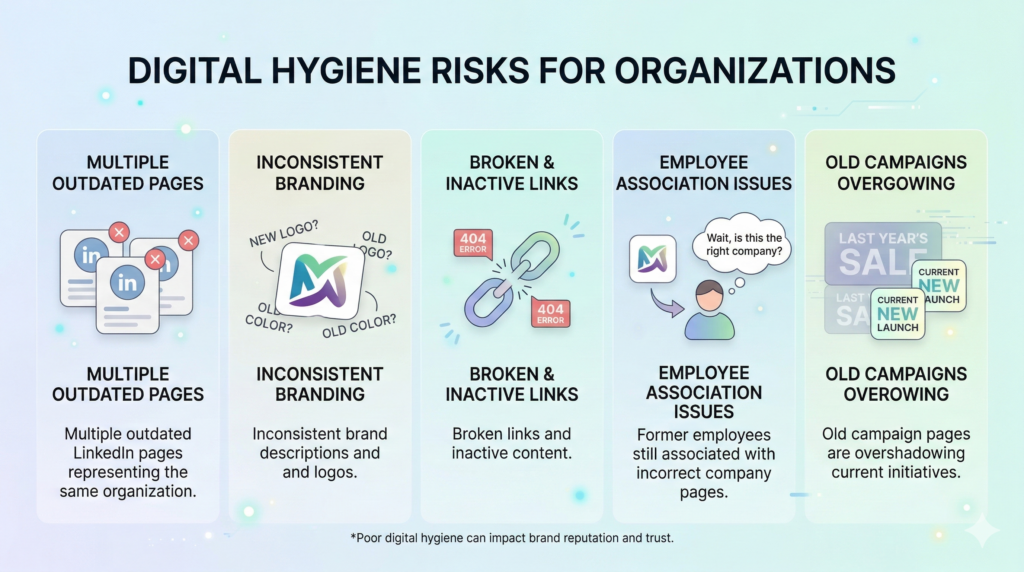
Without proper digital hygiene, companies often face several issues:
- Multiple outdated LinkedIn pages representing the same organization
- Inconsistent brand descriptions and logos
- Broken links and inactive content
- Former employees are still associated with incorrect company pages
- Old campaign pages are overshadowing current initiatives
These inconsistencies create confusion for audiences and dilute brand credibility. Just as organizations maintain operational hygiene internally, digital assets also require regular maintenance.
How Digital Assets Consolidation Helps
Digital asset consolidation refers to the process of organizing, managing, and maintaining all digital properties of a brand in a structured and consistent manner. It ensures that every digital touchpoint accurately reflects the brand’s identity and messaging. It can be a social media page, online profile, or content repository. When managed effectively, consolidated digital assets create a cohesive online presence that strengthens credibility and improves audience trust.
A well-managed set of digital assets offers several advantages.
1. Brand Credibility
People often verify a brand’s authenticity through its online presence. Consistent messaging, updated profiles, and active engagement signal professionalism and reliability.
2. Discoverability
Well-structured digital assets improve search visibility. When company pages, posts, and profiles are aligned, it becomes easier for audiences to discover the brand through search engines and platform algorithms.
3. Audience Engagement
Digital assets are not just static resources—they are channels for communication. Active pages encourage conversations, community building, and brand interaction.
4. Business Opportunities
A strong digital presence often becomes the gateway to partnerships, hiring opportunities, media coverage, and customer acquisition.
Steps Toward Effective Digital Asset Consolidation
Improving digital asset hygiene does not require a complete overhaul. Instead, it involves structured steps to organize and maintain assets.
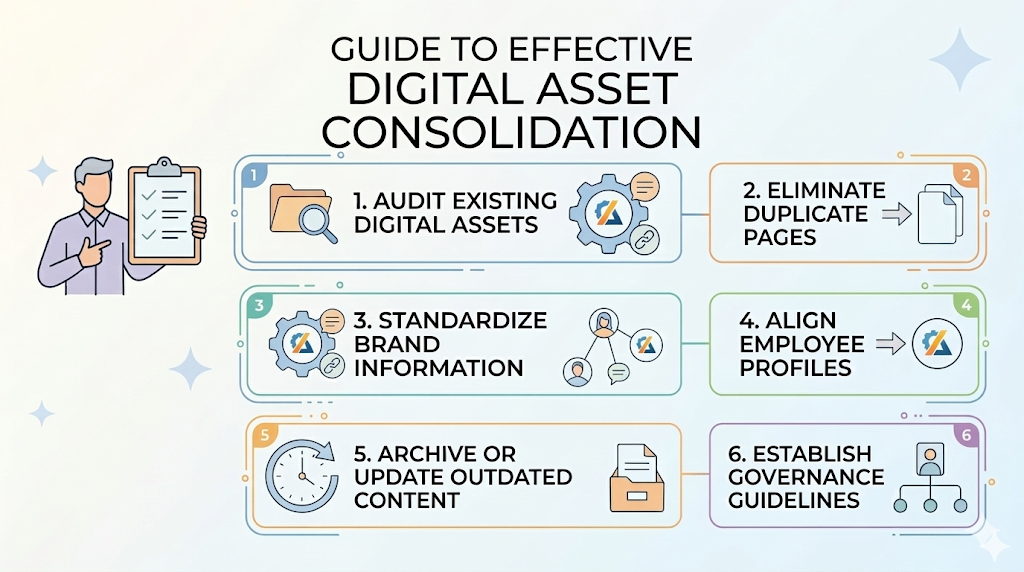
1. Audit Existing Digital Assets
Start by identifying all digital assets related to the organization. This may include company pages, showcase pages, employee-created pages, and inactive profiles on social media platforms like LinkedIn.
2. Eliminate Duplicate Pages
Over time, multiple pages may be created unintentionally. Consolidating followers and closing duplicate pages helps maintain a single authoritative presence.
3. Standardize Brand Information
Ensure that the company description, logo, banner image, website link, and industry tags are consistent across all official pages.
4. Align Employee Profiles
Employees play a major role in amplifying brand presence. Encouraging them to correctly list the company in their profiles ensures stronger visibility and accurate representation.
5. Archive or Update Outdated Content
Old campaigns, outdated announcements, or irrelevant content should either be updated or archived to maintain a clean feed.
6. Establish Governance Guidelines
Assigning responsibility for page management helps maintain consistency. A defined content and update process ensures digital hygiene is maintained over time.
Final Take-Away: Building a Sustainable Digital Asset Strategy
Digital asset consolidation is not simply about organizing files or pages; it is about creating a reliable and consistent brand experience across the digital landscape. When audiences interact with a brand online, they expect clarity, authenticity, and professionalism. A well-maintained digital ecosystem makes it easier for audiences to find accurate information, engage with content, and connect with the brand. It also helps organizations maintain control over how their identity is presented online.
In an era where the first interaction with a brand often happens online, maintaining digital hygiene is no longer optional—it is a strategic necessity. By consolidating digital assets and maintaining consistency across platforms, organizations can ensure that their digital presence truly reflects the credibility, clarity, and professionalism they aim to represent.
As a marketing agency, Shail Digital can help organizations streamline their digital presence through structured digital asset management and consolidation strategies. From auditing existing assets to maintaining digital hygiene across platforms, our marketing expertise ensures that your brand’s digital ecosystem remains organized, consistent, and impactful.
If your digital assets feel scattered or difficult to manage, get in touch with us at info@shaildigital.com to get control back of your brand’s online presence.
Recent Comments